Moscow
Eugene OneginMoscow is the destination of the Larina family’s long journey and the setting named at the opening of the Seventh Canto. Seen from the road as a bright arc of churches, gardens, and belfries, it draws the travellers onward; reached through the city barriers and the rutted Tver road, it becomes the threshold to a new social and narrative setting.
Setting and Arrival
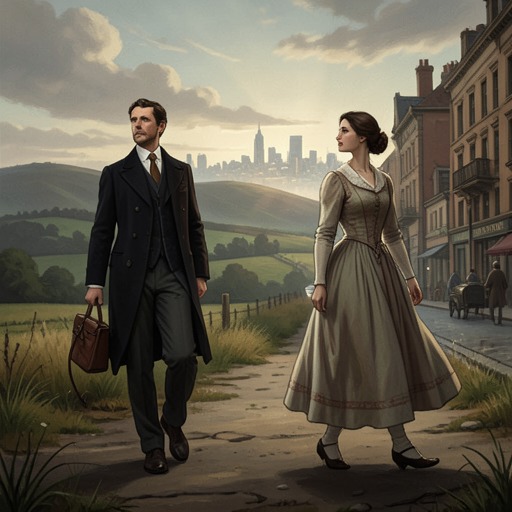
The Seventh Canto is explicitly headed “Moscow,” giving the city structural importance before the travellers arrive. The approach is first marked by a change in scale: after seven days and nights on the road, the travellers see white Moscow raising its old spires, whose countless golden crosses glow like innumerable fires. The distant skyline turns the city into a visible destination, not merely a name on a route.
The narrator responds to the sight with personal delight, recalling a bright semicircle of churches, gardens, and high belfries. This remembered view combines sacred architecture and cultivated greenery, presenting Moscow as a layered city whose skyline gathers religious and civic landmarks into one panorama. The passage’s movement from distant image to the narrator’s recollection makes arrival an emotional as well as geographical event.
The Journey to the City
Moscow is reached only after a journey that makes distance and travel conditions palpable. The travellers plod for seven days and nights, and the road itself is described as wretched: bridges have long been neglected, while bugs and fleas infest the stations. These details place the journey’s duration alongside its discomfort, so that the bright view of Moscow is set against the worn infrastructure encountered on the way.
The city comes nearer in stages. The travellers first glimpse its towers and crosses; then the city barriers appear, and the coach is borne along the road of Tver over ruts and holes. The sequence turns approach into a passage across thresholds, while the rough final stretch prevents the city’s splendour from erasing the material hardships of reaching it.
Seasonal and Narrative Significance
The journey belongs to a changing seasonal landscape. Autumn lingers as though reluctant to depart, with nature seeming to await winter; later, the dissolving beams of spring send snow rushing down from the surrounding hills in turbid streams. These seasonal shifts frame Moscow within the novel’s larger movement through time, while the road links those changes to the Larinas’ relocation and renewed participation in society.
The city’s arrival also changes the narrative’s horizon. The rural journey ends at Moscow’s barriers, but the destination opens onto the Seventh Canto and the social world toward which the Larina family is travelling. Moscow is therefore both a concrete place reached by coach and a structural turning point: its distant lights promise arrival, while the battered road records the cost and duration of getting there.